
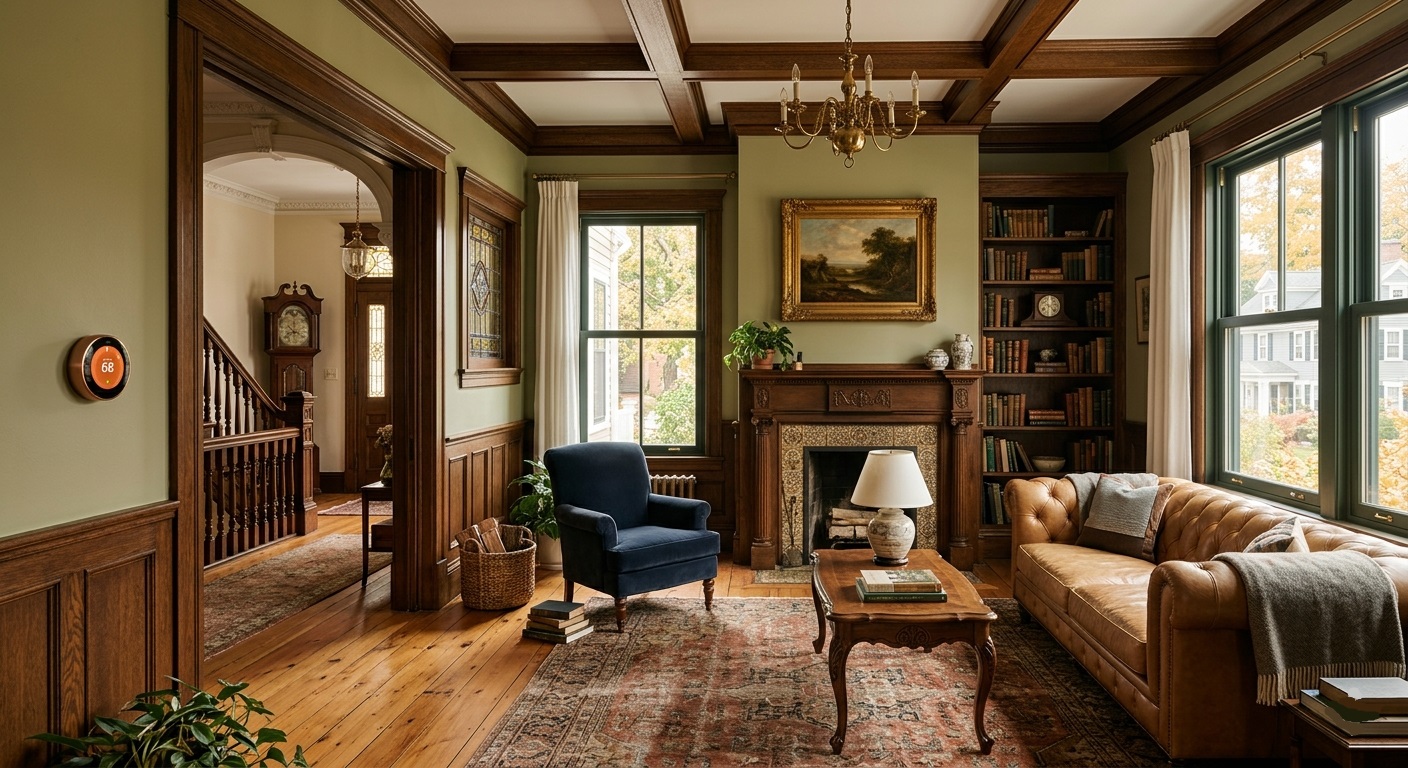
Attleboro has a housing stock that tells the city’s history. Victorians and colonials in Dodgeville, mid-century ranches in Briggs Corner, triple-deckers near the commuter rail – these are homes with character, but also homes with decades of systems that were never designed with energy efficiency in mind. For homeowners who want to remodel sustainably, older properties like these are where the real work begins.
Why older homes are both the challenge and the opportunity
A home built in the 1920s or 1950s wasn’t insulated to modern standards. The wall cavities are often thin or filled with materials that have long since settled and compressed. Windows are single-pane. Heating systems run on forced hot water or steam -inefficient by today’s benchmarks but often expensive to replace outright.
The opportunity is that each of these systems represents a meaningful upgrade target. Blown-in insulation, air sealing around penetrations, window replacement with modern double or triple glazing, and smart thermostat integration on older heating systems can collectively reduce energy consumption dramatically without requiring a gut renovation. In Attleboro’s climate – cold winters, humid summers – the return on these upgrades tends to be faster than in more temperate markets.
The contractor piece most sustainable remodeling guides skip
Most green remodeling content focuses on materials and products. What it under emphasizes is that the quality of the installation matters as much as the product itself. Spray foam that isn’t applied correctly creates moisture trapping issues. Windows that aren’t flashed properly leak air regardless of their U-factor rating. Heat pumps installed by contractors unfamiliar with older duct systems underperform and generate callbacks.
In a market like Attleboro, finding contractors who understand both the sustainable upgrade side and the quirks of older Massachusetts housing stock is the real challenge. These aren’t always the same contractors – a roofer who’s excellent at asphalt shingle replacement may have no experience with cool roofing materials, and vice versa. Homeowners who want sustainable outcomes need contractors who’ve done this work in similar properties before, not ones learning on the job. Local Contractors Marketing’s Attleboro contractor resource covers the local trades landscape and can help connect the right contractors with homeowners planning upgrades in the area.
Where to start in a pre-1980 Attleboro home
The building science consensus is consistent: air sealing before insulation, insulation before mechanical upgrades, mechanical upgrades before renewables. Adding solar to a leaky, poorly insulated house is like filling a bathtub with the drain open. The sequence matters.
A home energy audit – available through Mass-save at no cost to Massachusetts homeowners – is the logical first step. It identifies exactly where the losses are, prioritizes upgrades by return on investment, and often unlocks rebates that make the work significantly more affordable. Attleboro homeowners who go through Mass-save before planning any major renovation frequently discover the highest-impact improvements aren’t the ones they assumed.
Sustainable remodeling as a long-term investment
The framing that tends to resonate with Attleboro homeowners isn’t environmental – it’s financial. Lower utility bills, higher resale value, and reduced maintenance on upgraded systems are the real selling points. The environmental benefit is a byproduct, not the pitch.
Older homes done right become some of the most efficient properties in a neighborhood. The bones are already there. What they need is thoughtful, sequenced upgrading by contractors who understand what they’re working with.