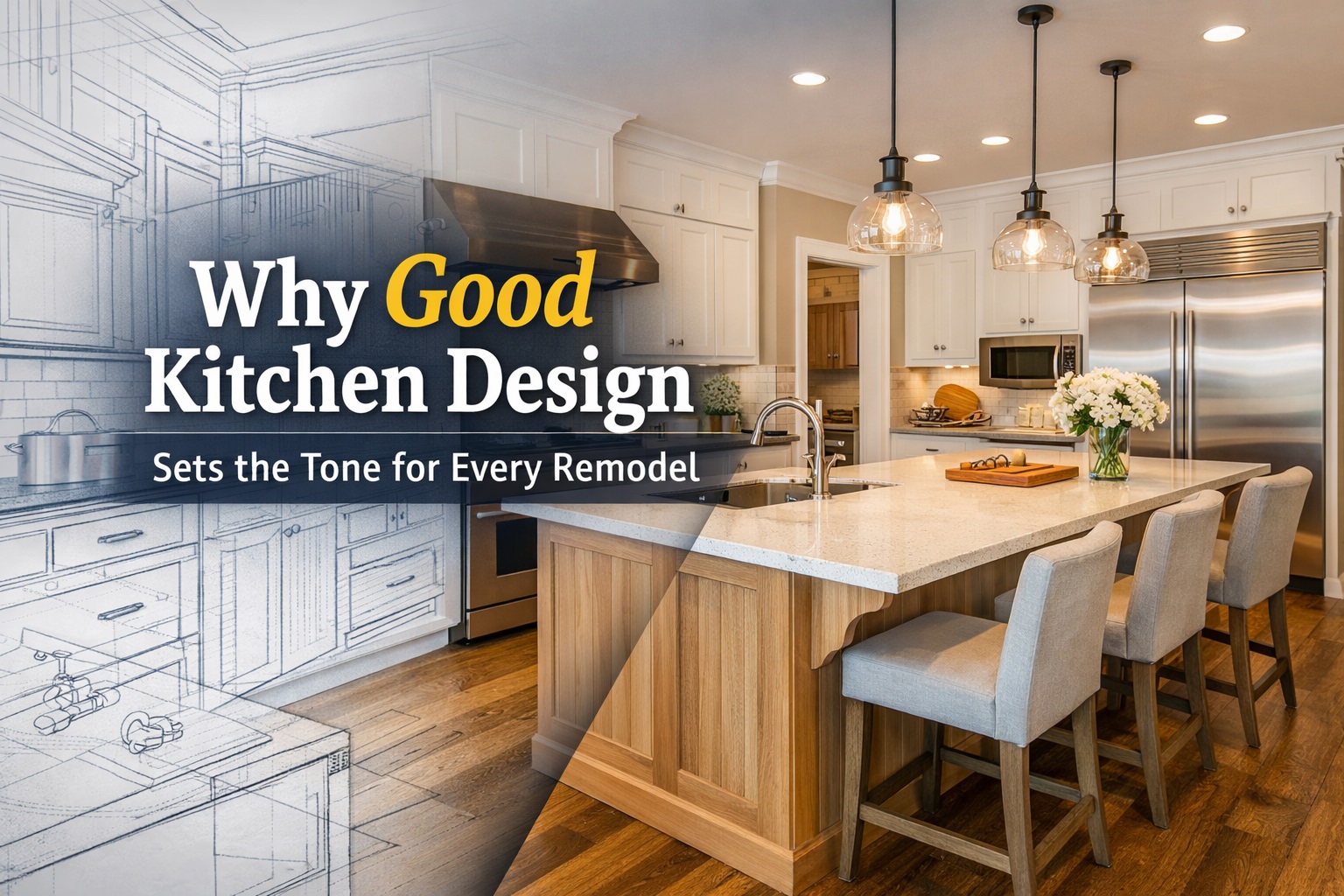
Kitchen remodeling is one of those projects where the planning matters just as much as the build. Long before cabinets arrive or countertops are measured, the quality of the design decisions tends to shape how successful the final space feels.
Homeowners often focus on finishes first — colors, hardware, appliances — but experienced designers know that layout, flow, and proportion usually determine whether a kitchen actually works day to day.
Design Is More Than How a Kitchen Looks
A well-designed kitchen balances movement, storage, and usability. Small choices, like where a sink sits in relation to prep space or how an island interrupts foot traffic, can make a big difference once the kitchen is in daily use.
Good design usually accounts for:
-
Natural walking paths through the space
-
How multiple people use the kitchen at once
-
Sightlines between rooms
-
Lighting throughout the day, not just at night
When these details are thought through early, the build phase tends to be smoother and the finished space feels intentional rather than patched together.
Why Clear Design Thinking Shows Up Online
When people research kitchen remodels, they’re rarely looking for technical language. Most searches describe outcomes or feelings: brighter kitchens, better storage, open layouts, or cleaner lines.
Design-focused remodelers who document their work clearly — with explanations of why layouts changed or how problems were solved — often stand out simply because their process is easy to follow. Consistency in how projects are presented makes it easier for homeowners to understand what a company actually does.
It’s not about volume or flashy marketing. It’s about clarity.
A Practical Example From Massachusetts
One Massachusetts-based remodeling company, Kitchens By Lombco, illustrates how design-forward thinking plays out in real projects.
Rather than focusing solely on finishes, their work often shows logical before-and-after transitions: walls opened to improve flow, cabinetry reconfigured for storage, and layouts adjusted to fit how families actually move through the space. The result tends to feel cohesive rather than over-designed.
Their portfolio reflects a consistent approach — modern functionality blended with the character of the home — which makes their projects easy to understand at a glance.
You can see examples of this approach on their website here:
👉 https://kitchensbylombco.com
Why Homeowners Benefit From Design-Led Remodeling
Massachusetts homes come with unique challenges. Older houses may have tight footprints or structural constraints, while newer builds still require thoughtful planning to avoid wasted space.
Design-led remodeling helps address:
-
Awkward or cramped layouts
-
Poor lighting in older kitchens
-
Storage limitations
-
Balancing modern updates with existing character
When these challenges are solved at the design stage, the finished kitchen usually feels natural, not forced.
The Takeaway
Strong kitchen remodels rarely happen by accident. They’re the result of clear design thinking, careful planning, and an understanding of how people live in the space.
The remodelers who take the time to explain their process and show their decisions clearly tend to earn more trust — not because they say more, but because their work is easier to understand.
In kitchen design, clarity almost always wins.